Resources
Frequently Asked Questions
-
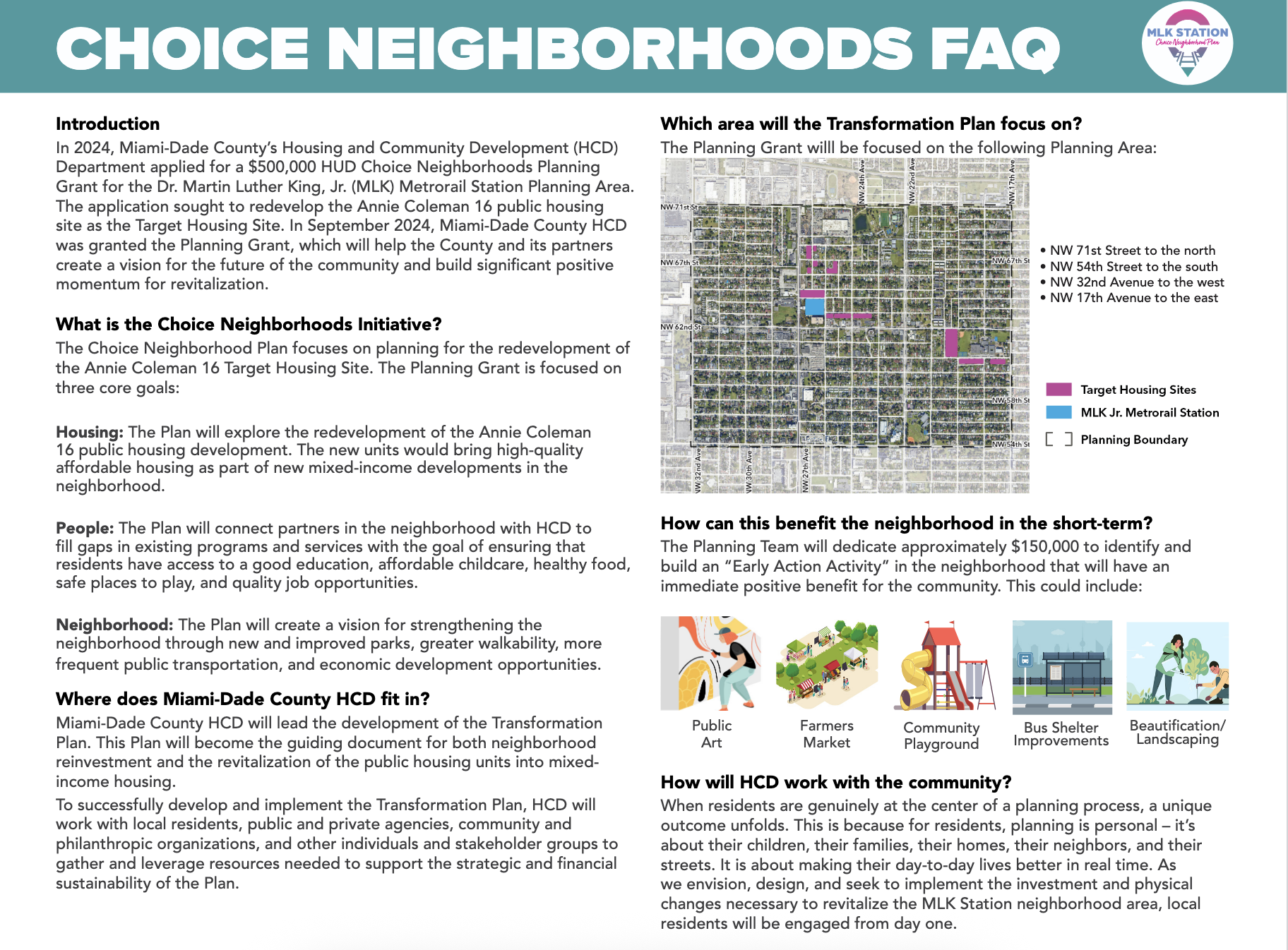
The Choice Neighborhoods Initiative (CNI) is a program funded by the U.S. Department of Housing and Urban Development (HUD) that helps communities revitalize neighborhoods with distressed or aging public housing.
Miami-Dade County’s Department of Housing and Community Development received a Choice Neighborhoods Planning Grant to support the revitalization of the Martin Luther King Jr. Station neighborhood.
This effort focuses on the redevelopment of the former Annie Coleman 16 and Jollivette Homes, which together included 116 public housing units.
The goal is to create a stronger, healthier, and more vibrant community by improving housing, supporting residents, and investing in the surrounding neighborhood.
-
The program focuses on three key areas: People, Housing, and Neighborhood.
People
Support current and former residents by connecting them with resources that help individuals and families thrive. This may include:
Education and youth programs
Job training and employment opportunities
Access to affordable childcare
Healthy food options
Safe parks and recreational spaces
Transportation and mobility resources
Housing
Redevelop aging public housing into high-quality, mixed-income housing that is financially sustainable and better integrated into the community.
The goal is to create modern, safe housing options while expanding opportunities for residents.
Neighborhood
Invest in improvements that enhance the overall quality of life in the MLK Station area. This may include:
Improved schools and educational programs
Parks and recreational areas
Commercial and economic development
Public transportation access
Infrastructure improvements
Community services and amenities
Together, these investments aim to create a vibrant, mixed-income neighborhood where residents can live, work, and thrive.
-
Residents—both current and former—play an important role in shaping the future of the MLK Station Neighborhood.
Community members are encouraged to participate throughout the planning process to help ensure the transformation plan reflects the real needs, experiences, and priorities of the people who know the neighborhood best.
Residents’ ideas, feedback, and knowledge will help guide decisions about housing, neighborhood improvements, and community services as the plan is developed.
-
Residents can take part in the planning process in several ways, including:
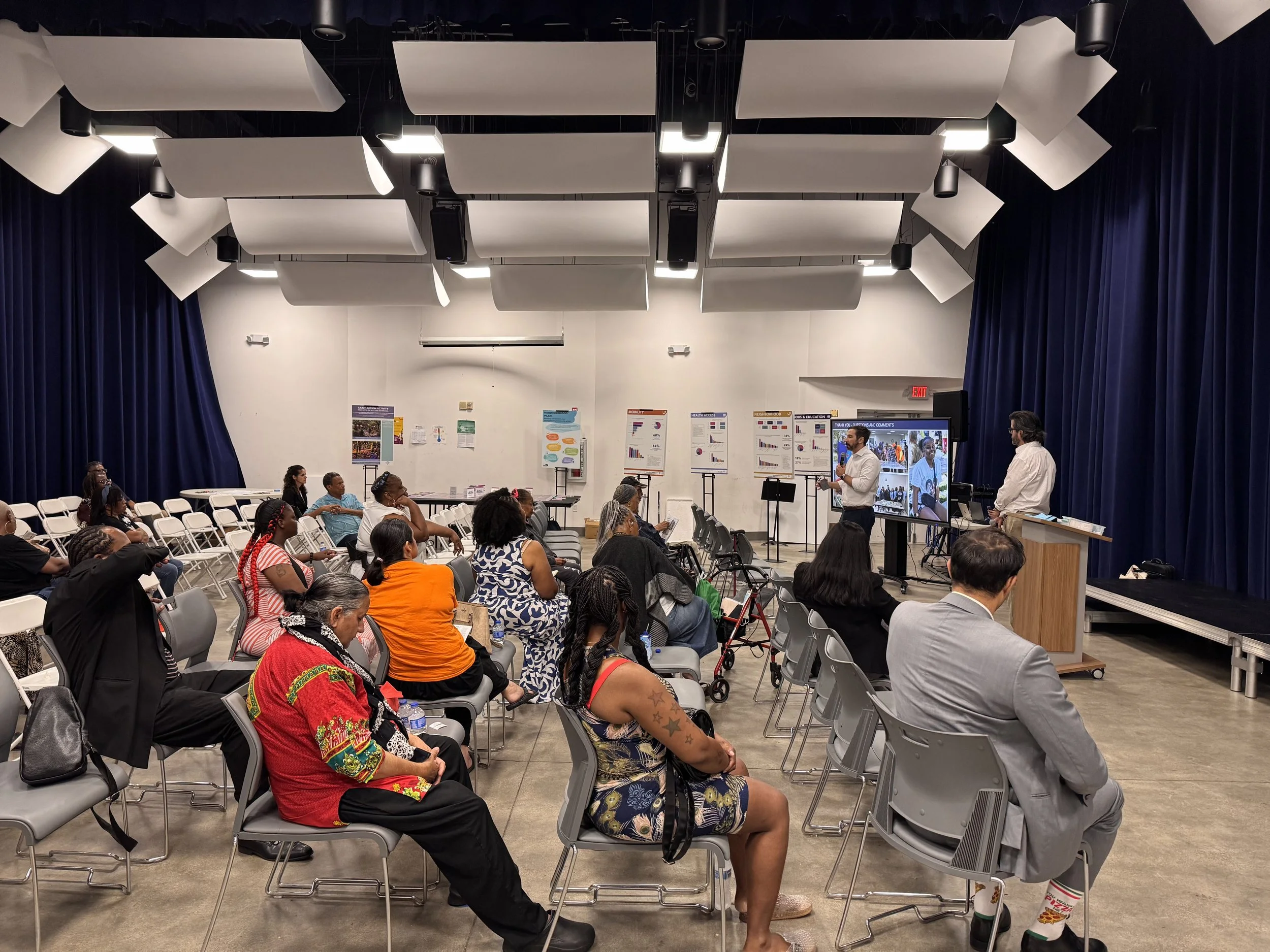
Attending community meetings and workshops
Participating in interactive group discussions and activities
Sharing feedback through surveys and community engagement events
Joining family-friendly neighborhood events
These opportunities allow residents to help reimagine the neighborhood, shape future investments, and build a stronger community together.ption
-
This initiative is about working together to build a thriving neighborhood. Resident participation helps ensure the plan reflects community priorities, strengthens relationships among neighbors, and creates a shared vision for the future of the MLK Station Neighborhood.
-
The types of improvements that may happen in the MLK Station Neighborhood will depend on community input, neighborhood needs, and market conditions.
In other Choice Neighborhood communities across the country, projects have included:
Reusing vacant school buildings for community purposes
Revitalizing retail storefronts and commercial spaces
Developing new grocery stores and neighborhood services
Improving parks, open spaces, and recreational areas
Investing in safer sidewalks, streets, and bike paths
Creating small business or entrepreneurship incubators
Community feedback will play a key role in identifying which improvements are most important for the MLK Station Neighborhood.
-
As part of the Choice Neighborhoods Planning Grant, approximately $150,000 is dedicated to a short-term project called an Early Action Activity.
This project is designed to show visible progress early in the planning process and help build momentum within the community.
Residents will help identify and shape a project that improves the neighborhood. Possible ideas may include:
Public art or murals
Community beautification projects
Cultural events or promotions
Small economic development or placemaking initiatives
The goal is to create a community-led project that brings positive energy and improvements to the neighborhood while the long-term plan is being developed.
-
Mixed-income housing is a type of community where people with different income levels live in the same neighborhood.
This means households with low-, moderate-, and higher incomes can live in high-quality housing within the same development.
Mixed-income housing helps:
Allow long-time residents to remain in their community
Reduce concerns about displacement
Promote diverse, stable neighborhoods
Keep residents close to jobs, transportation, and city services
-
The final amount and type of housing will depend on community feedback, planning analysis, and market conditions.
As part of the planning process, a market study will be conducted to determine development options that are financially feasible.
However, the Choice Neighborhoods program requires 100% replacement of the existing public housing units as part of the new mixed-income community.
-
No. Residents will not need to move during the planning process.
The planning phase focuses on studying the neighborhood, gathering community feedback, and exploring potential housing options for the future.
-
Once the plan is finalized, Miami-Dade County will begin working with partners to secure funding and implement the vision for the neighborhood.
This includes building partnerships with:
Public agencies
Private developers and investors
Community organizations
Philanthropic partners
Miami-Dade County will also apply for HUD’s Choice Neighborhoods Implementation Grant, which can provide significant additional funding to help bring the plan to life.
Resources
Community Meetings